Sunday, December 12, 2010

Toddlers’ language – as logical as it can be


Maria 1y.6m.

Children are our great teachers! Probably one of the most important things to learn from them is to be happy with every little thing (which we usually take as it is): when sun shines, when one plays balloon or feeds ducks, etc. We really lack positive emotions in our routine lives and can learn to do so when looking at our child. What we can also learn is to be logical when speaking.

Toddlers have already extensive passive vocabulary, understanding everything what is told them. They also start to try speaking themselves: imitate animal sounds, shorten the words, mix sounds in the words. The process of language development is outstandingly interesting. I’m also astonished how logical is everything what they say. Sometimes there is just one-two words enough to understand what Mary wants to tell (while for adults it can take at least a sentence of several words) – she finds exactly the words, which convey the bulk of information. Another thing is negative question, which is sometimes puzzling for an adult: Don’t you want to go to sleep? Children perfectly know what to answer: Yes! - if they don’t want and No! – if they want.
And this is probably just the beginning…

Monday, November 22, 2010

Water Week


Maria 1y.5m.

We never know the worth of water till the well is dry. ~Thomas Fuller, Gnomologia, 1732
As most of the children Mary loves to take a bath, sometimes it is really hard to get her out of it. So, when I had a week off I decided to tell her more about the water – unique resource of our Planet, which is so vital for every living creature. I was telling her about the water and its place in the nature, about the ponds, seas, rivers and lakes. Of course, it was done with the help of presentations for children (e.g. http://900igr.net/kartinki/priroda/Voda-i-vodojomy.files/Vodoemy.html), books and showing it in real nature.

1. First, I told her about the water cycle showing it in the book: Water evaporates and forms clouds – the clouds provide rain and snow – which is collected in rivers, lakes, underground reservoirs, and oceans – that are the source for further evaporation. Mary enjoyed it a lot as she liked that the book was interactive: one had to match figures (e.g. sun, clouds) in the right place.

2. We conducted an experiment to observe water in its different aggregative states: we boiled the water and put a glass with a bit of water in the freezer.

3. We made an aquarium out of bottle (sorry, didn’t manage to take a photo). We cut PET bottle into two parts, put clay in one of the part and dented there my former beads =) and small stones. We used green cotton, which became weeds, and poured water inside. Aquarium became a centre of attention for the whole week – it was definitely a new experience for the small one!
4. Water games!
• The game Mary liked the most is also the simple one: to catch “fish” with the help of glass from the bowl and put it in another bowl. She played it for approx. 1 hour, what is veeery long for this age group.
• Pour water in a bowl and with the help of sponge put it in another bowl – interesting game, probably, for older children;
• Before Mary took the bath I worked a bit with two bottles. I made some hole in one bottle and int hte cap of another bottle. When Maria was taking a bath, I showed her new toys :) - I filled in the first bottle with the water and we together observed how water was running out through the multiple holes. Then, we filled in the second bottle with the water: it was much fun for both of us, we could sprinkle each other!
• We didn’t try it ourselves yet, but it should be interesting to have several bottles/containers with water, which are coloured in different colours. This is also good material to continue studying the colours.
• Another thing is to make an experiment to find what stays afloat and what drowns when one throws them in the bowl/bath etc.

5. Of course, we could not live without creative part. As Maria still likes a lot to work with cereals I suggested her that we make a fish out of it. Then, she also made an aquarium with green weeds (studied green colour), where glued several fish. On the bottom of the aquarium she put some clay where we dented beans and pasta, which depict pebble and shells.


Sunday, November 7, 2010

Farewell to Autumn

Maria 1y.5m.

Bittersweet October. The mellow, messy, leaf-kicking, perfect pause between the opposing miseries of summer and winter. ~Carol Bishop Hipps

I love autumn… It is so beautiful and quiet… It is such a peaceful time for mind and soul, indeed as a pause between heat and cold. It encourages to think a lot, it encourages to take care of everyone and everything, to start smth new… It is definitely a lovely time to be either outside or at home..

We are often walking with Maria outside, observing how the nature prepares for the hard winter: birds are flying away, leaves are changing colour and falling down, people around putting on warmer clothes. She seems to be interested in the whole process but possibly not as much as I am. She loves much more to touch things, so we gather acorns and chestnuts; we make bouquets of colourful leaves (pity, that they shrivel so fast); we run in the puddles and walk when it is raining…

At home we try to catch the breath of autumn on the paper, too. I drew the tree and Mary glued the leaves to show the shedding of leaves. Here, she drew the rowan with her fingerprints.

We also made men of acorns: I was doing the first, Maria repeated what I did; I just helped her in the end with mouth and an eye. Then, she had a task to insert matches into piece of clay to make a hedgehog. She loved it so much that I made a fir-tree, where Maria also inserted matches. On the hedgehog’s needles we put some apples (violet, though =)) prepared by Mary.


Monday, October 18, 2010

Socialization Era


Maria – 1y. 4m.

Definitely human is a social being and communication with others provides us with lots of valuable aspects: sharing experience, sharing emotions, learning, caring… (the list seems to be endless). Once there emerges the moment of acute communication hunger in everyone’s life.

I see now how Maria becomes more attentive towards others, how sincerely she is interested in other people's life, how closely she watches the faces of people passing by. When she sees kids, she goes straight forward to them to gain some socialization experience. Of course, there is a long way of learning communication science but some success we already have. Before borrowing the toy, which does not belong to her, she asks whether she can take it. She says also “Thanks!”. She can share her toys, but not always willingly does it =).

But there is still a way to go. Often, when Mary sees than someone is there, where she wants to be (e.g. swing is busy), she can burst in tears. So, I’m teaching her now that one should stand in a queue and wait until the thing she wants is free. With a help of toys and roleplays we started a full-fledged learning of how to communicate with kids and adults. I really hope, it will help obtain socialization experience in efficient way.

Saturday, October 2, 2010

Local Animal Planet

Maria – 1y.4m.
As far as I know babies are very keen on studying animals: the first words they start to pronounce are often sounds of various fauna representatives (Moo! Oink! Baa! Mew! Coo!), they love to play with animal toys, they like to recognize familiar animals and study new ones in the books. The culmination most probably is Zoo visit, where they can see all animals in their “close to natural habitat” doing their own business: eating, sleeping, walking etc.

So, in September we decided to have an animal week. Throughout the whole week together with Maria we have been studying as many animals as we could, recalled their sounds, read books about them.

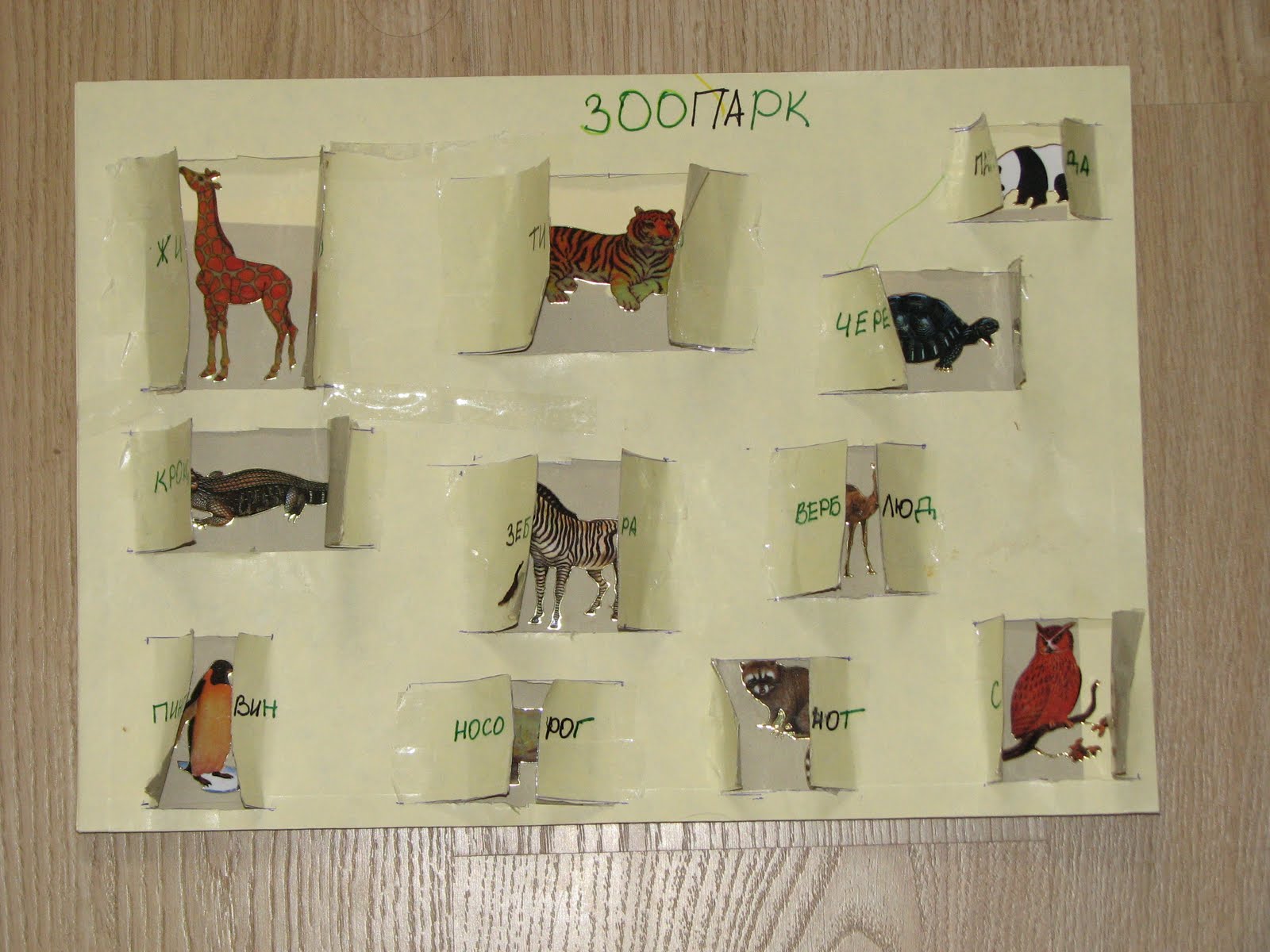
To ease and to make our "studies" more interesting I prepared home zoo. In every window somebody lives: tiger, zebra, owl… I also wrote the names of each one. Of course, Mary cannot read yet, but this was done with the perspective and with the intention that she gets used to the letters. At first it was interesting for her just to open windows, then I asked her to find this or that animal and later she tried to name every animal.

We added a bit of creative work to make our learning even more interesting and efficient. We made a giraffe out of various kinds of cereal, which in an easy and efficient manner develops fingers. Maria evidently enjoyed this so much that she played with the cereal for quite a while after we finished our “masterpiece”.

Our animal week was marked by the discovering the world of Real animals in local zoo! It was a fountain of emotions! Our baby girl was really astonished to see all animals in real!

Saturday, September 18, 2010

Games When Mum is Cooking

Cooking for six people every day is like having a cafe. =)
Linda McCartney

Maria -1y. 3m.

I try to spend almost all my time with our lovely baby. I don’t think it is an exaggeration as I work almost full time but she is little yet and demands lots of attention. So, basically we do all homework together: clean bath, remove dust, wash floors, iron shirts (seems very similar to Montessori development method ;)). Maria enjoys it very much and is very helpful. I’m sure, she would be very keen on cooking too, but as she is not tall yet and cannot see what is happening on the cooking table - she cannot perform cooking tasks yet. Besides, it can be quite dangerous due to the heat and sharp knives. So, one has to be creative to suggest such an activity to the baby that he does not disturb mum, when she cooks.

So, here are mine solutions:
1. Colourful Clay is good one. Mary tears a piece of clay and presses it over the paper. She also works out her fingers and studies colours simultaneously, which is very good for development.
2. Bag with Secrets. I give Maria my old bag with different kinds of small items like Kinder Surprise toys, small balls, musical box etc. Maria takes it all out, carefully studies, plays with the bag’s fasteners and puts all things back. Then, mum has to hide bag again so these things would appear as new next time.
3. Cereal drawing, which reminds me of beautiful sand imagination videos.


So, I put cereal on the tray and let Maria act. After her active drawing there is a good argument to wash the floor =)

4. Family Album is also one of the most preferable things to look through when her mum is busy. She loves to find herself on the pictures, recognizes other members of the family. When doing this, she speaks a lot and I try to support our dialogue. So, it is fun for both!

With these exercises, we achieve several goals: mum has cooked the dinner and the small one has spent time in exciting and efficient manner!

Thursday, September 2, 2010

Methods to Develop Early - Glenn Doman

Method of Glen Doman was the first for me to discover. Mr.Doman is the founder of the Institutes for Achievement of Human Potential in US, works a lot with children, which have brain problems. He suggests that when stimulating one part of brains, we can achieve higher activity of the whole brain system. So, every child, according to his theory, can become a genius.
Here are my reflections on his method for developing kid:

1. It is well-known that the brains develop fast when we are small yet and, thus, one has to provide higher intellectual load when the baby is small. For better intellectual development, children also have to move more. Doman proposes to stimulate children crawling on his first days of life. -> Agree on the encouraging moving activity of the baby, but not when he is so small. I think baby’s organism needs to adapt to a new world. But pushing him to crawl so early can become an unnecessary stress.

2. Doman suggests that we should start teaching children as early as possible, right after the birth. Flashcards with the words printed in red colour, and dots for numbers to teach Math should be shown to the baby at least 6 times a day. -> I made flashcards for Maria when she was 5 m.o. and started showing them to her. Frankly, I could not guess what she is thinking about the whole process – there wasn’t too much emotions on her face. I have been doing it for several weeks but then I stopped mainly for time constraints (you need to be with a child for the whole day together).

And also it seemed to be that the aim to start reading early was not paying-off. To my mind, at that period of Maria’s age it was better instead to go outside, to study surrounding world with real things (I was showing her nature, different kitchen appliances, books, toys), to read poems, to make gymnastics, etc., which is not encouraged by Glenn Doman as these types of activities are considred to be a waste of time. Besides, in the education process the child becomes a passive learner, not an active thinker.

Definitely the experience with Doman method was valuable for me. I was again assured that the potential of children is endless (much depends on mum’s inputted effort), that moving activity is crucial for health and for intellectual development and that with repeating method you can basically teach child whatever you want. I agree with him that the lessons should be somehow organized, put on a systematic basis. But I would better do it on my own way, which seems to me more interesting not just studying boring flashcards several times EVERY day! Other good thing from Doman method trying - flashcards. We tend to look at them, to speak about things drawn there. I have cut some into pieces and now we are making puzzles out of them.